


Are you curious about how far back SSDI can pay you? Many people are surprised by the complex system of retroactive SSDI benefits. This system can offer financial help for months or even years of disability.
SSDI is a key federal program for people aged 19 to full retirement age with severe medical issues. Knowing the SSDI back pay timeline is important for managing your money during tough times.
Understanding the SSDI application process is key. It helps you know how far back SSDI can pay and what affects your retroactive benefits. This guide will explain the rules and help you get the most out of your disability compensation.
Key Takeaways
- SSDI can provide back pay for up to 12 months before your application date
- Retroactive SSDI benefits depend on your disability onset date
- A five-month waiting period applies to most SSDI claims
- Medical documentation is key for back pay eligibility
- Getting help from a professional can boost your SSDI back pay chances
Understanding SSDI Benefits and Back Pay
Social Security Disability Insurance (SSDI) helps people who can’t work because of health issues. It’s a federal program that keeps disabled workers financially stable. This is important when health problems stop them from working.
Defining SSDI Benefits
SSDI is a big help for workers who can’t keep a job because of health problems. The Social Security Administration (SSA) figures out when to start SSDI payments. They make sure people get the money they need.
Core Eligibility Requirements
To get SSDI, you must meet strict rules. The SSA looks at several things to decide if you qualify:
- Sufficient work credits earned through previous employment
- Medical documentation proving total disability
- Inability to perform substantial gainful activity
- Expected disability duration of 12 months or longer
To get SSA back payments, you need to have worked enough. In 2023, you need 40 total credits. You must have 20 of these in the last 10 years. The amount of back pay depends on how much you worked.
By October 2023, disabled workers get an average of $1,352.32 each month. This shows how much SSDI helps those who can’t work.
SSDI Back Pay: An Overview
Social Security Disability Insurance (SSDI) can be hard to understand. Knowing about back pay is key for those seeking disability benefits. So, when does SSDI start, and how do people get money for past months?
Back pay is money given to SSDI applicants for the time between when they got sick and when their claim was approved. It helps people get back lost income during the long wait for approval.
What is Back Pay?
In the SSDI back pay guide, back pay is explained as:
- The time from when they got sick
- To when their SSDI claim was approved
- Minus the five-month waiting period
Why Do Applicants Receive Back Pay?
Applicants get back pay for a few big reasons:
- To make up for lost income while waiting
- To help with the financial struggles of being disabled
- To offer financial help while adjusting to new life changes
The SSDI five-month waiting period means no benefits for the first five months after getting sick. Back pay helps fill this financial gap, giving much-needed support to those who are disabled.
How Far Back Can SSDI Pay You?
Understanding SSDI can be tricky. It’s important to know how far back you can get benefits. The date you became disabled is key.
The Social Security Administration (SSA) has rules for SSDI. These rules affect how far back you can get paid.
The Established Onset Date Explained
The SSA picks a date when they say you became disabled. This date is very important:
- It marks when your disability started
- It affects how much back pay you can get
- You need medical proof for this date
Understanding the SSDI Waiting Period
The SSA waits five months after you became disabled to start paying. This wait helps:
- Make sure you’re really disabled
- Save the SSA from too much work
- Check if you’re disabled for a long time
You can get back pay for up to 12 months before you applied. This depends on when you became disabled and your medical records.
| Waiting Period Details | Impact on Benefits |
|---|---|
| Five-month waiting period | No benefits paid during initial 5 months |
| Maximum retroactive period | 12 months before application date |
| Medical evidence requirement | Crucial for establishing onset date |
It’s important to document when you became disabled. Also, gather all your medical records. Good records can help you get more back pay.
The Timeline for SSDI Back Pay
Applying for Social Security Disability Insurance (SSDI) can be hard. Knowing how long SSDI pays back helps set expectations for money.
The SSDI disability date is key for back pay. The process takes time, with many steps to review and check things.
Initial Application Process
Several things affect how long it takes to apply for SSDI:
- How complete your medical records are
- How complex your disability claim is
- How busy the Social Security Administration is
- How right your SSDI earnings record is
Typical Processing Times
It usually takes 3-5 months to process an SSDI application. Important things to remember include:
| Application Stage | Estimated Duration |
|---|---|
| Initial Application Review | 3-5 months |
| Reconsideration Phase | 3-4 months |
| Administrative Law Judge Hearing | 6-18 months |
Note: Cases can differ a lot because of different situations and documents.
Applicants should be patient and keep track of all SSDI claim updates. This helps with back pay processing.
Factors Affecting Back Pay Duration
Understanding SSDI benefits means knowing what affects your timeline and back pay. How complex your application is and the quality of your documents matter a lot. They decide how fast you get your SSDI award letter back pay.
Several key factors can influence the duration of your SSDI decision delay payment:
- Application Complexity
- Medical condition severity
- Number of medical conditions
- Extent of medical documentation
- Completeness of supporting documentation
- Comprehensive medical records
- Detailed physician statements
- Work history documentation
Navigating Application Complexity
The complexity of your SSDI application affects how long it takes to process. If you have many medical conditions or a complex health history, it takes more time. Disability examiners need lots of evidence to make a fair decision.
Critical Supporting Documentation
Good supporting documents can help speed up your SSDI decision. You should collect:
- Complete medical records
- Detailed treatment history
- Expert medical opinions
- Comprehensive work limitation assessments
Knowing these factors helps you prepare your SSDI application better. This can cut down on delays and increase your chances of getting back pay on time.
Appeal Process and Back Pay
Applying for SSDI can be tough, and getting denied is common. Knowing how to appeal is key to getting past payments and back pay.
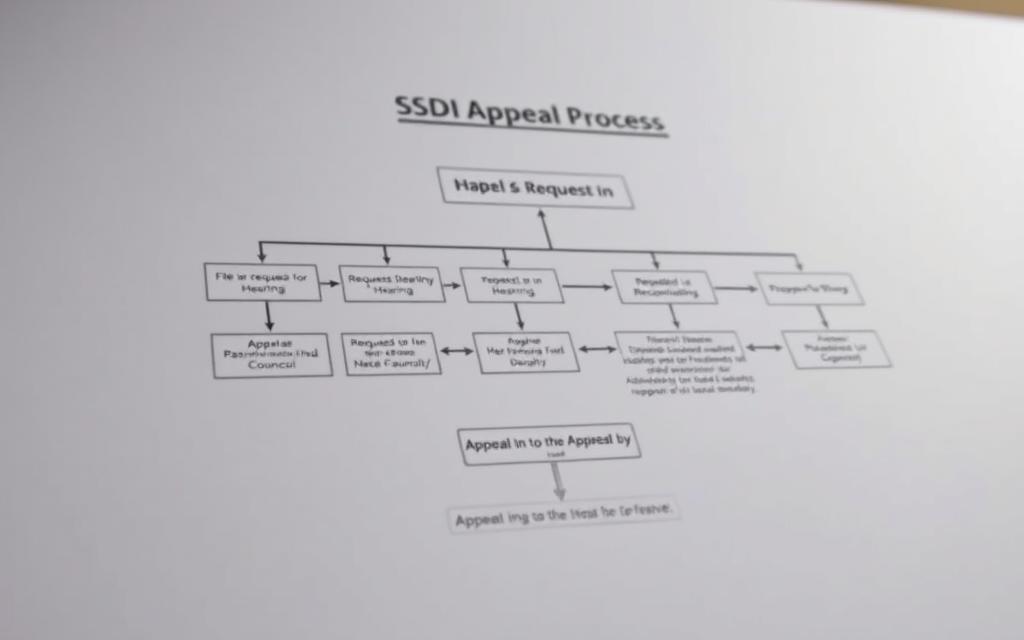
The Social Security Administration (SSA) has many appeal levels. Each one lets you add more evidence to your claim. This can help you get more back pay.
What Happens If Your Application Is Denied?
If your SSDI application is denied, you have four appeal options:
- Reconsideration (first level of appeal)
- Hearing by an Administrative Law Judge
- Review by the Appeals Council
- Federal Court Review
Potential for Back Pay upon Successful Appeal
Winning an appeal can change your SSA benefits date and back pay. The SSA figures out back pay from when you first applied or when you got disabled.
| Appeal Level | Potential Back Pay Impact |
|---|---|
| Reconsideration | Limited additional evidence opportunity |
| Administrative Hearing | Strongest chance for presenting evidence |
| Appeals Council | Review of previous hearing decisions |
| Federal Court | Final legal recourse for claim |
Key advice: Never give up on your SSDI claim. Each appeal stage offers a new chance to get the benefits you deserve.
SSDI Payment Schedule
Understanding SSDI payments can be tricky. Knowing the rules helps plan finances and expect monthly benefits.
The Social Security Administration has a payment schedule. It’s based on when you were born. This makes sure you get money on time every month.
Monthly Payment Distribution
SSDI rules say when you get your money. Payments are usually given out on certain Wednesdays.
- Those born between the 1st and 10th get paid on the second Wednesday.
- People born between the 11th and 20th get paid on the third Wednesday.
- Those born between the 21st and 31st get paid on the fourth Wednesday.
Connection to Back Pay
Back pay is different from regular payments. It’s usually given as a big check, not with your monthly money.
| Birth Date Range | Payment Wednesday |
|---|---|
| 1st – 10th | Second Wednesday |
| 11th – 20th | Third Wednesday |
| 21st – 31st | Fourth Wednesday |
Mark your calendar for payment days. Set up direct deposit for easy access to your money. Getting your payments on time is important.
Calculating Your Expected Back Pay
Understanding SSDI backdated payment can be complex. But breaking down the calculation process helps. The Social Security Administration uses specific criteria to determine SSDI back pay amounts. This can significantly impact your financial recovery.
The SSDI back pay timeline covers the period between your disability onset date and application approval. Calculating these payments involves several key factors:
- Established onset date of disability
- Application submission date
- Five-month waiting period
- Monthly benefit amount
Formula for Back Pay Calculation
The Social Security Administration follows a specific method to determine back pay. The calculation starts with your official disability onset date. Then, it subtracts the mandatory five-month waiting period.
| Calculation Component | Details |
|---|---|
| Onset Date | Date disability began |
| Waiting Period | 5 months from onset date |
| Back Pay Start | After waiting period ends |
Examples of Back Pay Amounts
Back pay amounts vary based on individual circumstances. For instance, if your monthly SSDI benefit is $1,500 and your back pay covers 12 months, you could receive approximately $18,000 in retroactive payments.
Applicants should keep detailed medical records and documentation. This supports their SSDI backdated payment claim. Each case is unique. Consulting with a Social Security disability attorney can provide personalized guidance.
Impact of Work Income on Back Pay
Understanding how work income affects your SSA back payments is key. The Social Security Administration (SSA) has rules for this. These rules help figure out your disability benefits.
It’s important to manage work attempts during your SSDI start date. This helps keep your benefits. The SSA offers two big ways to help people go back to work:
Trial Work Period Explained
The Trial Work Period lets you test working without losing benefits right away. You can:
- Earn more than the SSA says is okay
- Keep getting full disability payments
- See if you can work regularly
Understanding Substantial Gainful Activity
Substantial Gainful Activity (SGA) is important for SSDI. In 2023, the SGA is $1,470 for non-blind people and $2,460 for blind people. Earning more than this can affect your SSDI benefits.
Important things to remember for SSA back payments are:
- Keep records of work and income
- Watch your monthly earnings closely
- Tell the SSA about all your work right away
Following these rules can help you get the most out of your disability benefits while you work.
Tax Implications of SSDI Benefits
Understanding taxes on Social Security Disability Insurance (SSDI) benefits is key. Knowing about SSDI past due benefits helps you manage your money better.

There are important things to think about when it comes to SSDI taxes. The IRS has rules for when you might have to pay taxes on SSDI back pay.
Are SSDI Benefits Taxable?
SSDI benefits might be taxed if you make a lot of money. The IRS looks at:
- Your total annual income
- Your filing status
- How much you make in total
Considerations for Back Pay
Getting a big check for SSDI back pay can be tricky. You need to know how it affects your taxes.
| Income Bracket | Potential Tax Liability |
|---|---|
| Below $25,000 | Typically No Federal Taxes |
| $25,000 – $34,000 | Up to 50% Taxable |
| Over $34,000 | Up to 85% Taxable |
Pro tip: Talk to a tax expert to figure out your SSDI taxes. They can help with back pay too.
Common Myths About SSDI Back Pay
Understanding Social Security Disability Insurance (SSDI) can be tough. Misinformation about back pay and disability benefits is common. This can confuse many applicants.
Misconceptions about SSDI can lead to disappointment. Let’s look at some common myths about SSDI back pay. We’ll separate fact from fiction.
Myth 1: Back Pay Covers the Entire Disability Period
Many think SSDI back pay covers the whole time they were disabled. But, there are limits:
- The SSDI five-month waiting period reduces back pay
- Back pay usually goes back 12 months before applying
- You need medical proof of when your disability started
Myth 2: Everyone Automatically Qualifies for Maximum Back Pay
Applicants often think they’ll get the most back pay. The truth is more complex. Several things affect if you get back pay:
- When you apply matters
- You need strong medical proof of your disability
- Your income and work history can change how much you get
Myth 3: The Application Process is Simple and Quick
Many believe getting SSDI back pay is easy. But, it’s often complex and takes a lot of time. You’ll need lots of medical records and patience.
Knowing these myths can help you set better expectations. It prepares you for your journey with disability benefits.
Future Changes in SSDI Payments

The world of Social Security Disability Insurance (SSDI) is always changing. New laws could change how we get back pay. It’s important for people getting disability now and in the future to know about these changes.
There are a few big changes coming to SSDI:
- Changes in how we figure out when you get disability
- How long you get back pay for
- Making it easier to apply and get reviewed
Emerging Policy Considerations
The Social Security Administration (SSA) wants to make disability benefits better. They’re looking at making it easier to get back pay and making it last longer. They want to help people with disabilities more.
Potential Financial Implications
New laws could change how we get disability benefits. The SSA thinks these changes could save money and make things more efficient. They want to:
- Make it easier to get back money if you got too much
- Make sure you get disability benefits when you should
- Use new technology to check things faster
People getting disability should keep an eye on these changes. Even though they’re not here yet, they show the SSA is working hard to help people with disabilities.
Resources for SSDI Applicants
Applying for Social Security Disability Insurance (SSDI) can be tough. Finding good resources helps a lot. They help you understand your SSDI earnings record and deal with delays in payments.
The timeline for getting a disability decision is important. Luckily, there are many resources to help you on your SSDI journey.
Official Government Resources
- Social Security Administration (SSA) Website: www.ssa.gov
- National Phone Number: 800-772-1213 (TTY 800-325-0778)
- Hours of Operation: 8 a.m. to 7 p.m., Monday through Friday
Application Assistance Channels
- Online Application Portal
- Local Social Security Office
- Disability Advocacy Organizations
Additional Support Options
If you’re having trouble with your SSDI application, think about getting a lawyer. Disability lawyers know how to handle these cases. They can also help you get more back pay.
Groups like the National Organization of Social Security Claimants’ Representatives (NOSSCR) give great advice. They help people get the best support for their SSDI needs.
Conclusion: Understanding Your SSDI Benefits
Understanding SSDI back pay is key for those seeking financial help. The path from applying to getting past payments is long. It needs patience, detailed records, and careful planning.
Your SSDI award letter back pay is a big help for those with disabilities. It depends on when you started being disabled, how long it took to apply, and waiting times. Keeping your medical and work history up to date is important to get the most back pay.
Getting help from disability lawyers or advocates can make a big difference. They know the SSDI system well and can make the process easier. Knowing about SSDI back pay can really help during tough times.
The SSDI program is here to help those with big disabilities. By knowing about back pay, keeping good records, and getting help, you can get the financial support you need.